

Elizabeth Freund Larus, Ph.D.
Adjunct Senior Fellow, Pacific Forum
Founder, E Larus Consulting
The Democratic party gained control of both houses of Congress, claiming a mandate to affect domestic and policy changes. Despite the Democratic victory, President Trump will retain primary responsibility for U.S. foreign policy and national defense. The U.S. Constitution grants the executive branch, led by the president, significant authority over foreign affairs and national security. Odds are that he will continue pursuing his current foreign policy agenda, while Democrats will seek to challenge or obstruct his initiatives.
On Wednesday, Trump appeared notably shaken by the election results. With a horse voice and one that lacked vigor, Trump avoided talking about the election results and instead gave an update on construction of the White Hall ballroom. Once over the initial shock, however, Trump is more likely than not likely to resume military strikes against Iran. He risked his legacy and Republican control of Congress on the war with Iran and is likely to follow through on his efforts to weaken the regime in Tehran. Polls taken before the midterms indicated that the majority of Americans, both Democrat and Republican, oppose the war. Despite the polls and his own low job approval rating (39%), Trump in October further built up the U.S. military presence in the Middle East, and armed naval vessels with a range of weapons and interceptors in preparation for more Iranian retaliation. He publicly stated several times that he would wait until after the midterms to resume strikes, allowing diplomacy another chance. U.S. Vice President J.D. Vance wrote a letter to Mohsen Rezaei, secretary of Iran’s Supreme National Security Council, seeking a diplomatic solution, but as of the time of writing, did not appear to move the needle.
Although foreign policy is largely the purview of the executive/president, Congress has a couple of tools to limit presidential power. First, Democrats might force Trump to withdraw troops from the Iran conflict by invoking the War Powers Act. The Act requires the President to terminate within 60 days, with a possible additional 30 days to withdraw safely, troops that have been committed to hostilities without Congressional consultation. Trump committed troops in February without consulting Congress. Second, the Democratic Congress is likely to refuse to appropriate funds to continue the war. Congress has the authority to stop funding a war by passing legislation that prohibits the use of taxpayer funds for military operations without its approval. This power is rooted in the Constitution, which grants Congress the authority to control military funding and declare war.
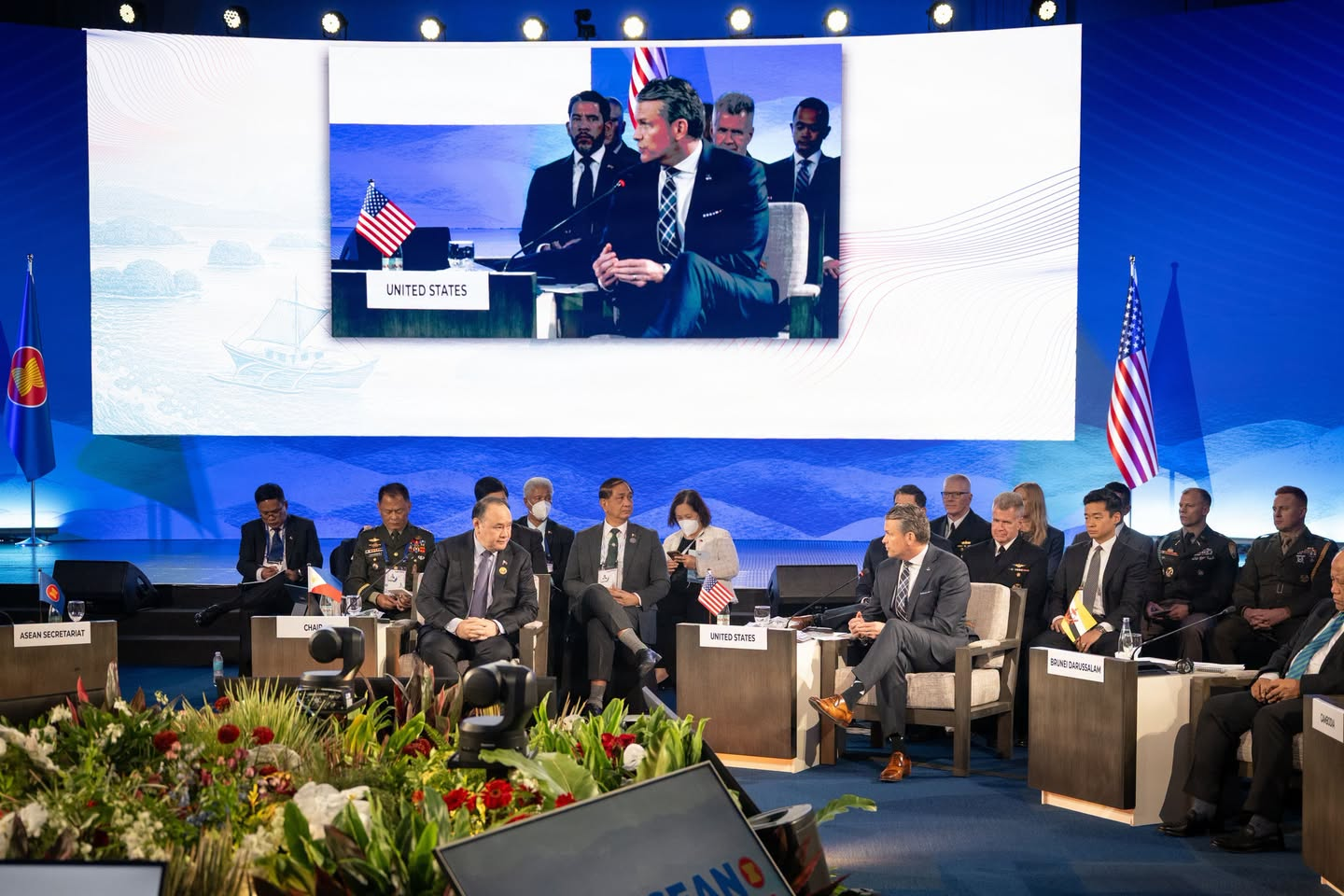
In another move that would affect Trump’s foreign policy and national security, expect House Democrats to bring charges of impeachment against U.S. Secretary of Defense Pete Hegseth. Rep. Hakeem Jeffries (D-NY), likely the next House Speaker, has already put Hegseth on notice, stating at a campaign rally in October that “One of the first things we’re going to do in the majority, we’re going to run Pete Hegseth out of town.” House Democrats fault Hegseth’s complicity in launching the Iran war, blowing up speedboats of suspected drug traffickers, pushing out military brass, and thumbing his nose at congressional oversight. House Democrats filed orders of impeachment in April 2026, but the effort failed under a GOP House. Expect House Democrats to renew their efforts after their inauguration on January 3, 2027. Impeachment requires a simple majority vote (218) in the House; conviction requires 67 Senate votes. Although the Democratic Senate majority falls short of the number needed to convict, an attempt to impeach would be a distraction to U.S. military action and Trump’s foreign policy.
Many Congressional Republicans and Democrats want Trump to support Ukraine defense against Russian military aggression. Congressional Democrats will try to affect Trump’s Ukraine and Russia policy by leveraging must-pass legislation such as the National Defense Authorization Act (defense budget bill) force Trump’s hand to support the defense of Ukraine and Europe. Trump is not likely to turn against Putin in favor of Ukraine.
Expect an extensive debate between Congress and Trump on AI, or “Superintelligence.” Trump has promoted the development of AI, emphasizing the need for the U.S. to maintain leadership in AI technology. Trump and his supporters in the AI industry argue that maintaining America's edge in artificial intelligence over China is crucial, stating that "whoever wins AI wins." Many American disagree, and do not want data centers, their power stations, and associated transmission lines in their communities. Pre-election polls indicated that the data center buildout across America was a key issue in the midterm elections, with respondents expressing dissatisfaction with data centers. Expect Trump to continue to push the AI and data center rollout, perhaps using Executive Orders in the face of Congressional resistance.
U.S. foreign policy toward China, Taiwan, and Latin America will remain largely the same. Congress is committed to the TRA and Six Assurances even though Trump might waiver. Trump will likely delay delivery of the US$14 billion arms package to Taiwan until after the APEC and G20 meetings, where he is likely to meet Xi Jinping. He is not likely to sign off on delivery before spring 2027, but Congress will try to compel him to do so.
U.S. foreign policy toward Israel is rapidly changing. Trump just announced that the U.S. would be dropping US$4 billion in annual military aid to Israel. Trump had discussed with Israel Prime Minister Netanyahu a gradual decrease over years and then cessation of aid but announced on November 4 that the U.S. would cut off aid at the end of the year. U.S. support for Israel is in flux. Support for Israel among Americans is decreasing; only 13% of Democrats support Israel, an historic low. American Jews historically vote Democrat. Israel’s loss of Democrat support is remarkable. As support for Israel among the electorate is evaporating, the number of members of Congress and Senators who do not support Israel is subsequently increasing. Trump and Netanyahu are falling out over Iran. Netanyahu pressed hard for regime change in Iran, drawing the Trump into a war that he is having difficulty ending. Trump will be hot and cold toward Israel in 2027 and 2028, cooperating in intelligence sharing, but increasingly critical of Israel, especially if the Iran war fails to wind down in 2027.

 256 bit SSL Encryption